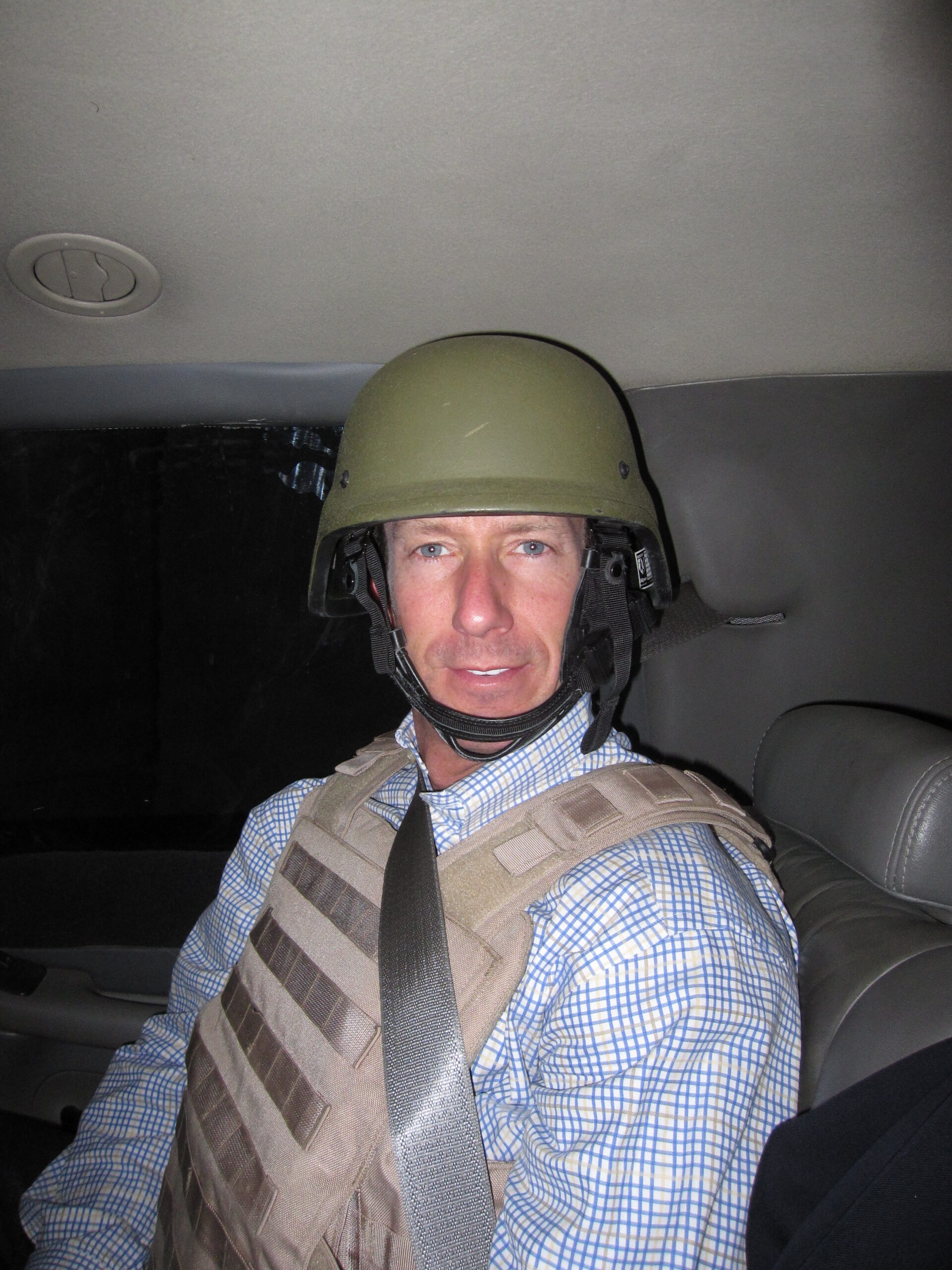
Scott Cathcart — Red Zone, Baghdad, Iraq
The threat was real. The infrastructure to counter it was not. So Cathcart built it.
At the height of the Second Gulf War, Scott Cathcart founded a defense technology company focused on a specific gap in force protection architecture: the need for rapidly deployable, blast-resistant structures and overhead protection systems capable of protecting personnel at Forward Operating Bases in active conflict environments. As a member of the global modular building industry trade board, Cathcart knew the commercial modular building industry had no answer designed for that operating environment.
Working alongside a 3-star Lt. General (Ret.) of the United States Air Force (USAF), former USAF Surgeon General and Joint Staff Surgeon, the company designed, engineered, and tested two force protection programs under a formal Cooperative Research and Development Agreement (CRADA) with the USAF and the Materials and Manufacturing Directorate Airbase Technologies Division of the Air Force Research Laboratory (AFRL).
The programs were validated. Both systems cleared testing at Air Force bases and were advanced toward large-scale deployment across active theaters before cancellation following a U.S. presidential administration change that led to major defense budget cuts. The technology worked. The cancellation was political, not technical. That distinction matters — it means the capability was real, the execution was proven, and the domain expertise Cathcart built during that period did not expire when the programs did.
The expertise is directly applicable now. The force protection architecture developed under those programs addressed Second Gulf War threat environments — indirect fire, mortars, RPGs, and vehicle-borne IEDs against fixed and semi-fixed positions. The asymmetric threat landscape of the current era is the same problem set with new actors, new weapons, and new technology layers. AI-enhanced targeting, autonomous platforms, and rapidly deployable defensive infrastructure are the current generation of the same operational challenge. The public-private framework Cathcart used to develop and test force protection systems under a CRADA — building real capability, validating it in the field, and delivering it to the military at scale — is precisely the model the Pentagon is now extending to a new generation of venture-backed defense technology companies.
For Cathcart, this is not historical context. It is directly applicable experience in an operational domain that is even more relevant today given the asymmetric threats of the Third Gulf War and other active conflicts.
The U.S. Air Force CRADA Programs
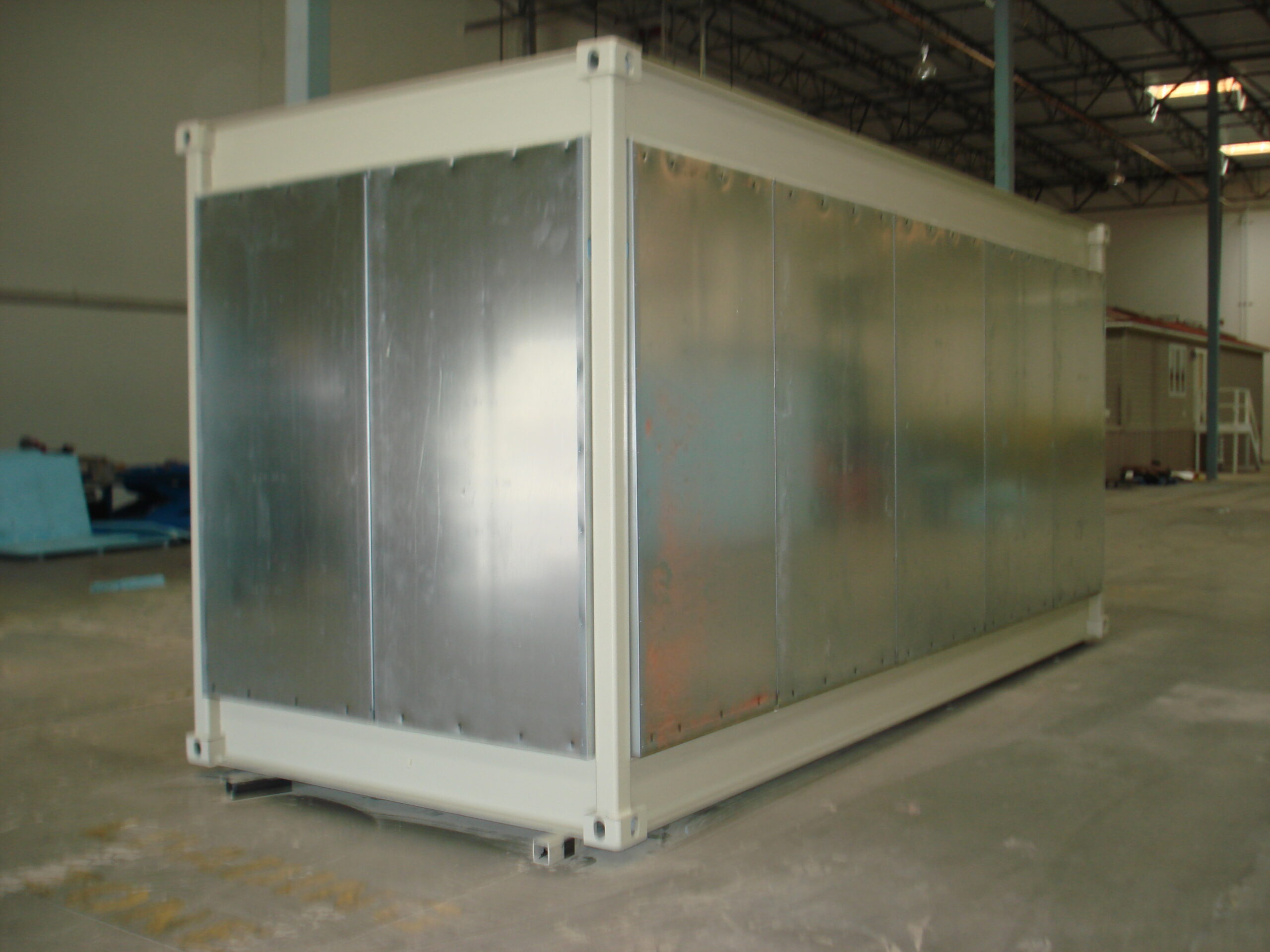
Blast Resistant Rigid Walled Expeditionary Structure, Tyndall Air Force Base program
The first USAF CRADA program, Blast Resistant Rigid Walled Expeditionary Structures, focused on the development of a modular building system for Forward Operating Bases designed to defeat indirect fire, mortars, rocket-propelled grenades (RPG), and vehicle-borne improvised explosive devices (VBIED). The system was successfully tested at Tyndall Air Force Base.
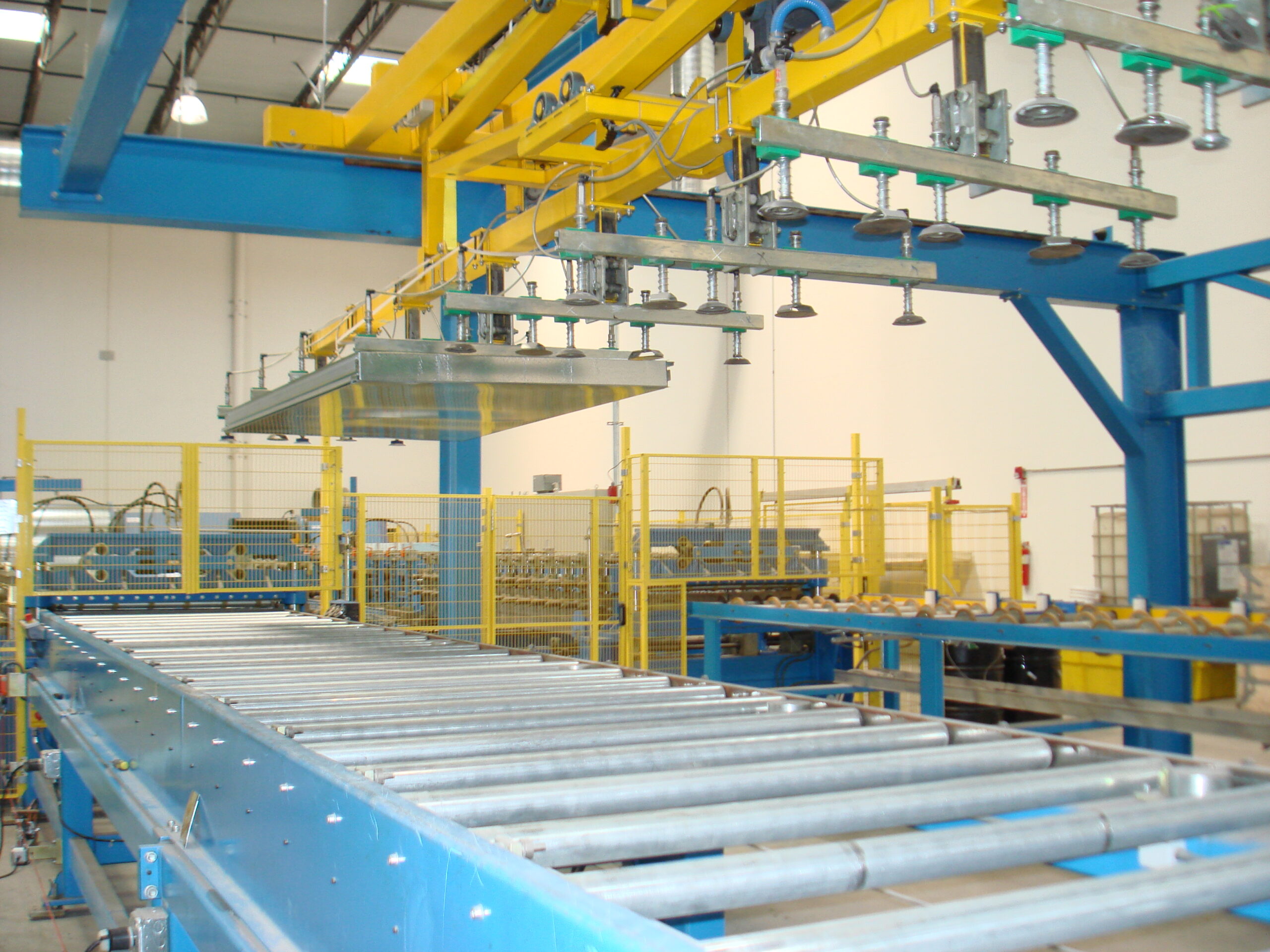
Blast-resistant composite structural panel production line — steel-skinned panels engineered to military blast specifications.
Force protection at the FOB level was one of the defining operational challenges of the Iraq and Afghanistan campaigns. Personnel lived and worked in structures that offered little meaningful protection against the indirect fire and VBIED threats that defined those theaters. The question was not whether better protection was needed — it was whether a rapidly deployable, commercially manufacturable solution could be engineered to meet actual military blast standards. The USAF CRADA was the formal mechanism to answer that question. The answer was yes.
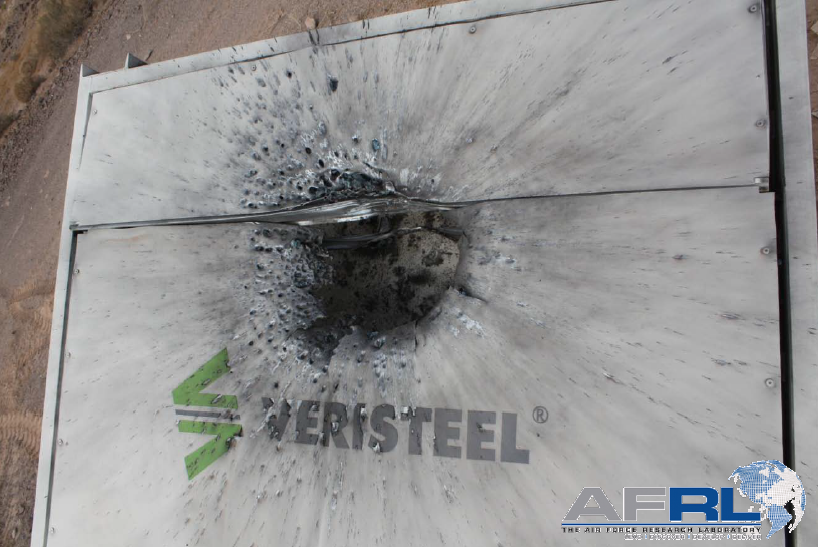
The second program, Overhead Protection for Expeditionary Shelters, was designed to address a specific and urgent problem: Container Housing Units (CHUs) deployed across Iraq and Afghanistan provided no overhead protection against indirect fire and mortar attacks. The OPS provided rapidly deployable overhead cover that could be installed directly onto existing CHU structures without reconstruction. The system was successfully tested at Yuma Air Force Base.
Both programs cleared testing validation and were advanced toward large-scale deployment. They were ultimately cancelled following a U.S. presidential administration change that led to major defense budget cuts, not for performance reasons. The technology worked.
|
|
|
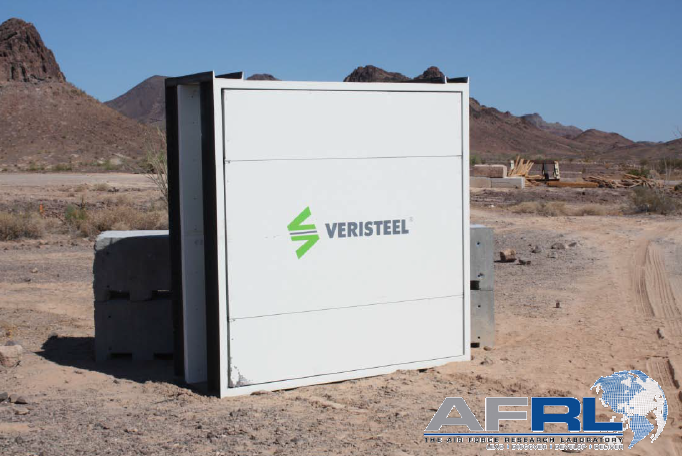
Overhead Protection System, pre-test, Yuma Air Force Base |
AFRL blast test result, Yuma Air Force Base |
The Deployment Context — Middle East
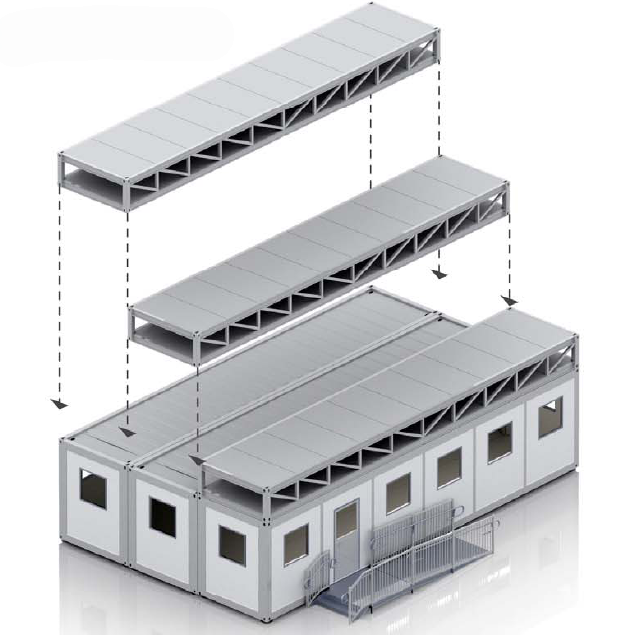
Overhead Protection System — designed to stack directly onto existing CHU structures
Across active theaters, personnel slept, ate, and worked in CHUs every night with no overhead protection against the mortar and rocket attacks that were a routine feature of life on forward bases. Retrofitting existing CHU infrastructure with a rapidly deployable overhead protection system — one that could be manufactured at scale, shipped using the same dimensions (stacked 3 high) as standard shipping containers, and installed without specialized equipment — represented a meaningful capability gap that the OPS program was designed to close. The technology was validated. The capability was real.
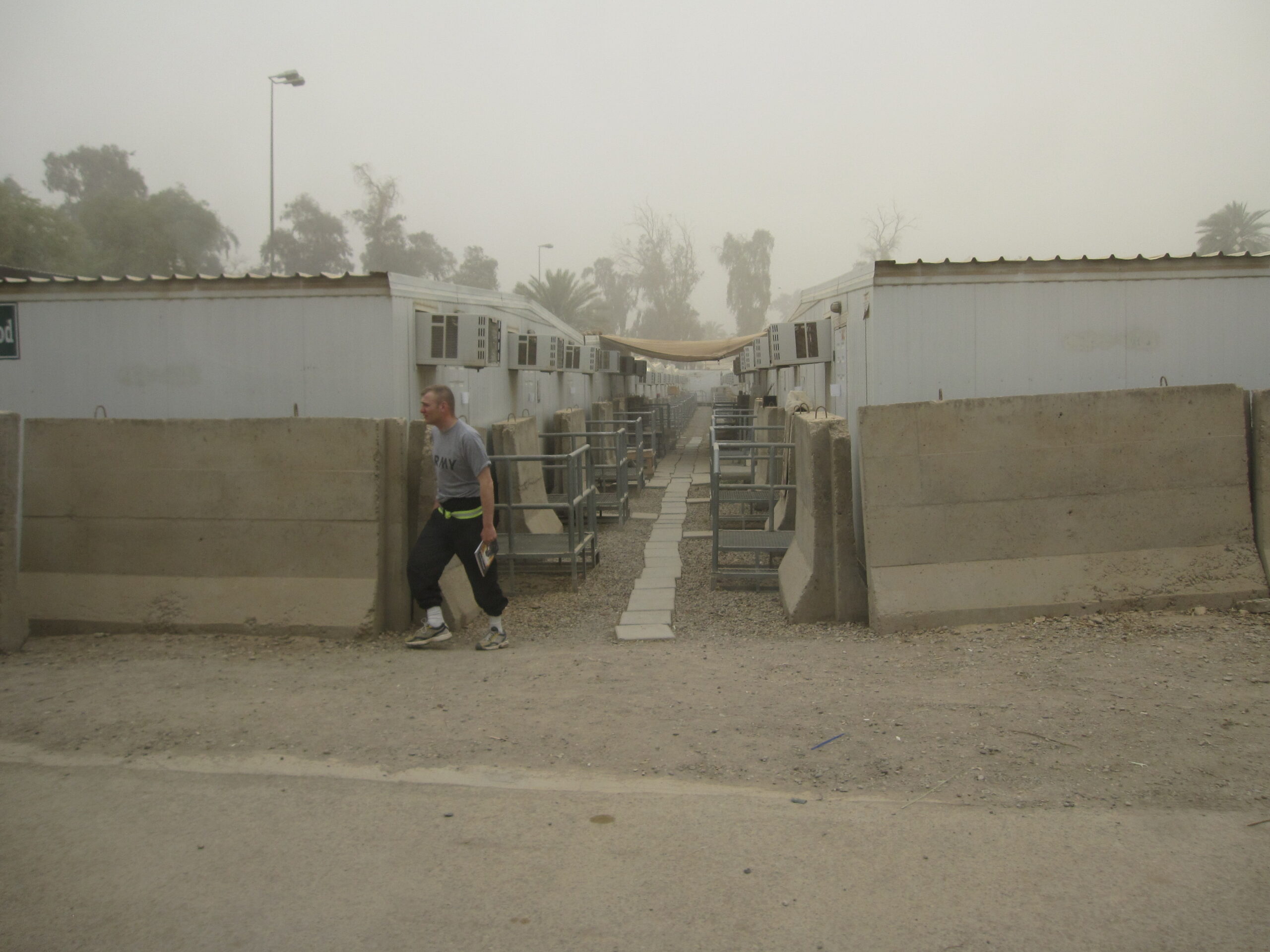
Unprotected Container Housing Units (CHUs)
U.S. Army, International Zone, Baghdad, Iraq
Force protection is not an abstract credential. Cathcart deployed to Baghdad during the Second Gulf War as an invited civilian guest of the Task Force for Business and Stability Operations (TFBSO) under DoD authorization, operating from the International Zone with full military support and PSD. The same threat environment the programs were designed to counter was the environment he operated in.
That is not a coincidence. It reflects a consistent operating pattern: Scott Cathcart does not advise from the outside. He visualizes the platform then builds it, tests it, and implements it — anywhere in the world.
Why This Matters Now
The Pentagon has begun doing something it has not done before. It is writing venture-backed defense technology companies into core missions at the prime contractor level — long-term, fixed-price enterprise contracts of the kind historically reserved for Lockheed, Boeing, and Raytheon. Anduril’s $20 billion Army enterprise contract in March 2026, consolidating over 120 existing orders under a single vehicle, is the clearest signal yet that a new class of defense company has arrived. The old guard still exists. But the procurement architecture is being rewritten around companies that can build, deploy, and sustain real AI-powered systems in the field.
Cathcart has operated at this intersection before. He designed and tested systems under a formal DoD research and development agreement. He deployed to an active conflict zone under DoD authorization. He participated in meetings at the Pentagon. He built working relationships with military and government counterparties by delivering real capability under real conditions — not as a vendor pitching from the outside, but as a participant in theater. It is a foundation that translates directly into credibility, relationships, and operational understanding in the defense technology sector.
The domain expertise is current. The operational logic is directly applicable. And the relationships built during that period — with the Air Force, with DoD, with the institutional framework that governs how defense systems get developed and fielded — do not expire.
For professional inquiries, contact Cathcart here.