Scott Cathcart has completed the Escape from Alcatraz Triathlon every year since 1997. Twenty-nine consecutive races as of June 7, 2026.
For anyone trying to understand how Cathcart is wired — as an athlete, as a frontier founder, as an operator — it is probably the most indicative shorthand available.
The Race

Cathcart on the bike course in the hills of San Francisco during EFAT 2008.
The Escape from Alcatraz Triathlon is not a standard race. It begins with a jump from a ferry boat into San Francisco Bay — a 1.5-mile open-water swim in 51-64 degree water through strong currents, from Alcatraz Island to the shore. It continues with an 18-mile bike ride through the hills of San Francisco, and finishes with an 8-mile run that includes the infamous Sand Ladder — a near-vertical 400-foot climb up a sand face. There is nothing gentle about the race.
Every year is different. Some years there are swells. Some years the wind adds whitecaps. The ebb tide is almost always unpredictable. Around 2,000 athletes jump from the boat in under six minutes in a rolling start, and the swim to shore is as much about navigation and current management as it is about fitness. The bike and run that follow are technical and punishing, but it is the swim that defines the race and sets it apart from every other triathlon in the world.
It draws elite athletes and age-group competitors from around the world. Finishing it once is an achievement most athletes are proud of. Finishing it 29 consecutive times, across all that life delivers over nearly three decades, is something different. The race does not get easier. The commitment to showing up every year also means living with discipline and giving it your all for the other 364 days a year as well.
The Streak
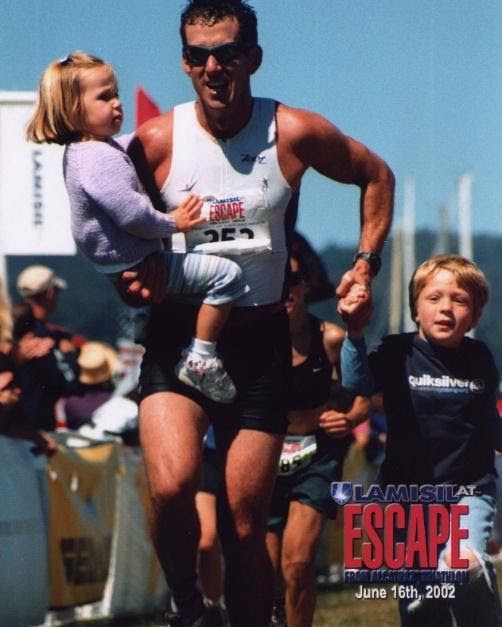
Escape from Alcatraz Triathlon on Father’s Day, 2002. Year six of the streak.
Cathcart’s streak began in 1997 and has not broken since. Every year, regardless of where he has been living or what has been happening in his life or his businesses, he has found a way back to San Francisco Bay every June for nearly three decades. The streak has survived multiple startups, cross-border relocations, industry changes, deal pivots, the raising of family, the building and unwinding of multiple companies, and operating in genuinely difficult environments.
Cathcart’s streak now stands as the longest active streak in the race’s history. The world record stands at 33 consecutive finishes, held by a retired competitor. Cathcart’s target is to tie it in 2030 and surpass it in 2031.
The streak is not about athletic longevity. It is a demonstrated operating system. Returning every year requires more mental discipline than physical when balanced against raising a family, building businesses across multiple industries and countries, and operating across four continents. The logistics alone of getting to San Francisco every June from wherever life has placed him is its own annual exercise in commitment. It is the same quality that keeps a founder in the arena long after the rational case for continuing has gotten complicated — a steadfast refusal to let challenging circumstances dictate the outcome.
A Family Milestone
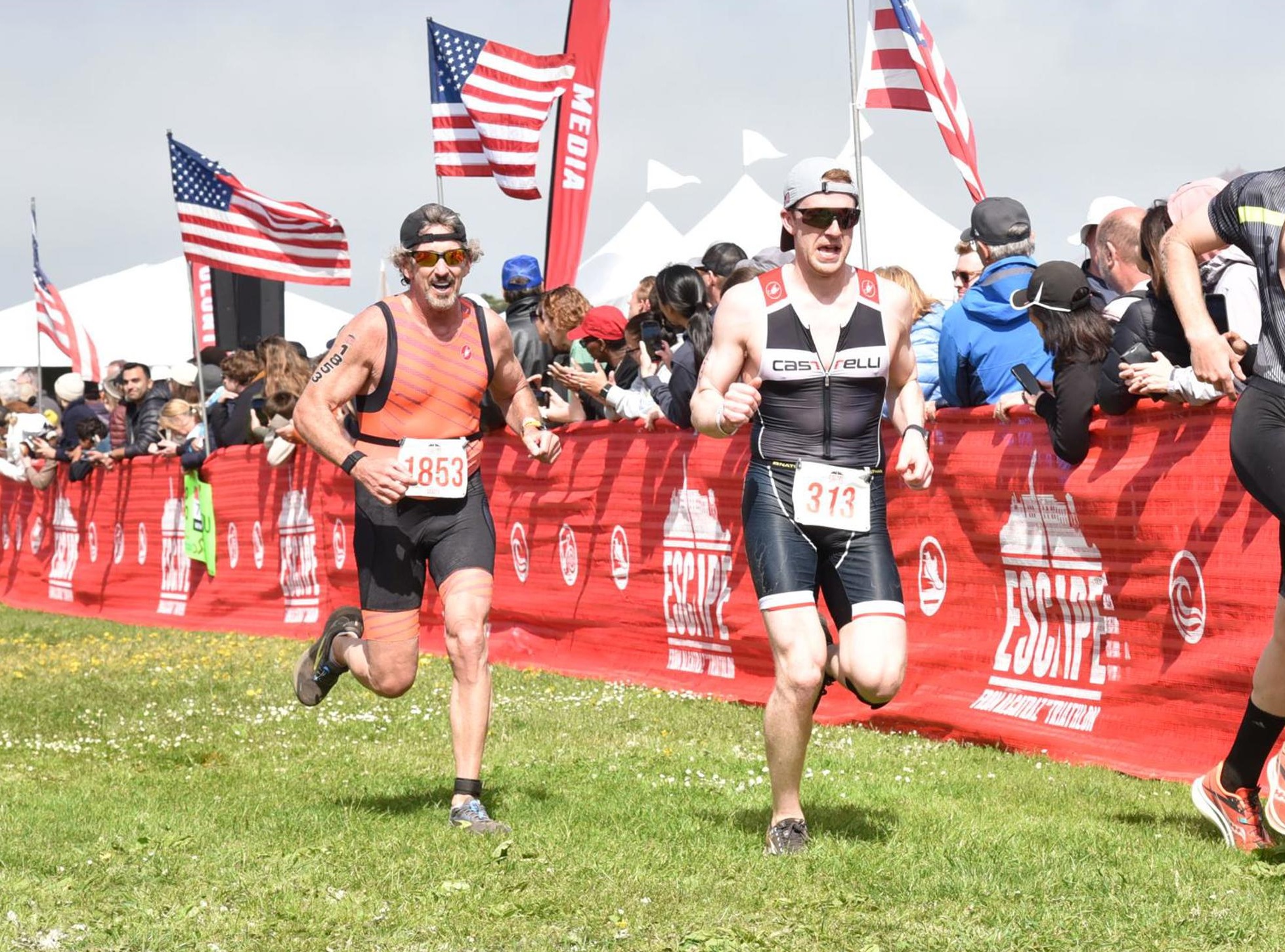
Cathcart and his son cross the finish line together at the 2024 Escape from Alcatraz Triathlon — his son’s first.
In 2024, Cathcart was joined at the start line by his son — competing in his first Escape from Alcatraz. They crossed the finish line together in 2:50, under the three-hour mark in his son’s first attempt.
Cathcart first raced EFAT in 1997 when his son was seven months old. One of the original reasons he started the streak was to send a message to his children by example: that choosing the harder, more rewarding path is always worth it. For nearly three decades, the race was something Cathcart did and his children watched. To have his son not only take up the challenge but insist on racing side by side for the entire event — swim, bike, and run — was more than he ever could have hoped for.
His son returned in both 2025 and 2026 and is now building his own streak with three in a row. Sharing that passion — and that perseverance — with the next generation is an absolute honor.
Beyond Alcatraz
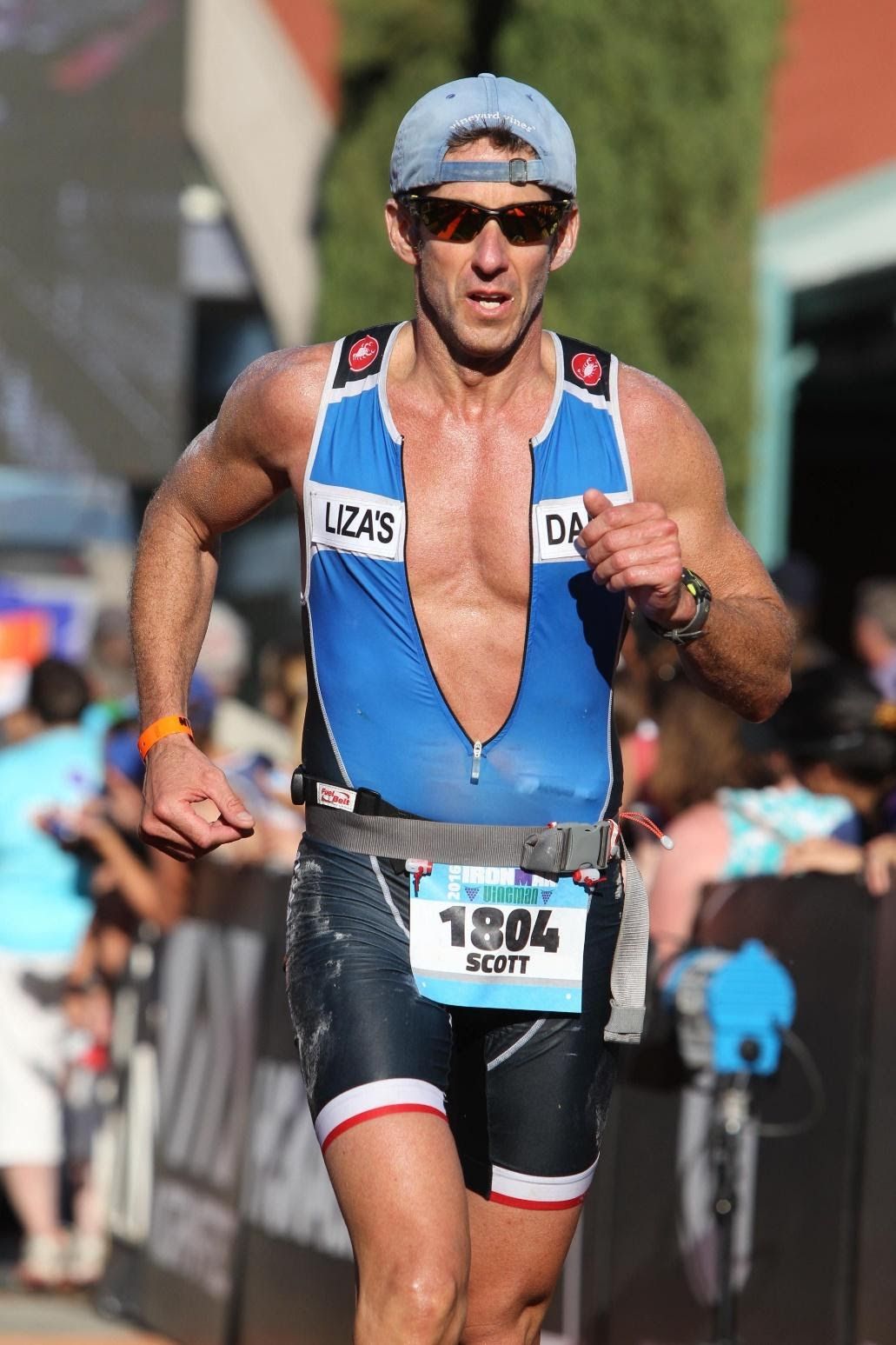
Cathcart finishing the Vineman Ironman in Sonoma County.
Competitive triathletes and great startup leaders have a lot in common — they are focused, well-prepared for multiple events, can recover from disappointments and adversity, are quick to respond, and they are prepared to give it absolutely everything they’ve got, every time.
The Escape from Alcatraz is Cathcart’s athletic anchor, but it is not the whole picture. He is also an Ironman triathlete and has run sub-3-hour marathons in New York City, Boston, and elsewhere. An Ironman is a 2.4-mile swim, a 112-mile bike, and a full 26.2-mile marathon, completed in sequence in a single day. It is a different kind of test than EFAT — less about a highly technical course with raw difficulty and more about sustained output over 10 to 12 hours. Training for these events year-round while running companies across multiple time zones is not a balancing act. It is an integrated discipline — the same capacity for sustained effort applied across every domain.
Endurance athletics have been a constant across every chapter of his career — less as a credential than as a practice, and a reliable indicator of how he approaches everything else.
Cathcart’s full EFAT race history and streak detail live at scottcathcart.net.
The Common Thread
Frontier entrepreneurship and endurance athletics share more than a superficial resemblance. Both demand tolerance for sustained discomfort. Both require functioning effectively under uncertainty, without guarantees, over long time horizons. Both punish the person who needs external validation to keep going — and reward the person who has internalized why they are doing it in the first place.
The businesses Cathcart has built — a GMP pharmaceutical platform in a Caribbean free trade zone, a defense technology company that took him to the Pentagon and Baghdad during a war, a modular infrastructure company that took him to Port-au-Prince after an earthquake, a global IP licensing platform built during the formative years of a new industry — were not built in favorable conditions. They were built the same way the streak was built: by deciding to show up, and then doing it again the following year.
That is not a personality trait. It is a capability. And it transfers.
For professional inquiries, contact Cathcart here.
For race insights from Cathcart’s Escape from Alcatraz Triathlon experiences, visit scottcathcart.net/escape-from-alcatraz-triathlon.